Home · About us
Founded in 2010 in Mexico, CEES contributes to the analysis, design, implementation, evaluation and improvement of programmes and policies in the education and social sectors.
The Centro de Estudios Educativos y Sociales (CEES) is an independent research centre, founded in 2010 in Mexico, and part of Estrategias de Acompañamiento y Servicios Educativos S. de R.L. de C.V. Its purpose is to contribute to the analysis, design, implementation, evaluation and improvement of programmes and policies in the education and social sectors. Its team has 30 years of experience in academia, evaluation and official responsibility for the design and implementation of education and social policies in Mexico and Latin America.
Since 2010 CEES has collaborated on more than 230 different projects, 82 of them for international organizations, including the Inter-American Development Bank, the World Bank, the United Nations Development Programme, UNICEF and USAID, among others. More than half of our collaborations relate directly to the design, advice on implementation and evaluation of policies and programmes whose aim is to promote social development, improve education and foster prosperity among vulnerable and lower-income populations.
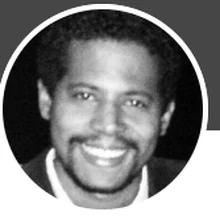
CEES operates under the direction of Dr. E. Miguel Székely Pardo, who holds a doctorate in Development Economics from the University of Oxford, in England, a master's degree in Economics from the same university and a master's degree in Public Policy from the Instituto Tecnológico Autónomo de México (ITAM). He has experience in economic development and education policy, including an academic career with 98 publications in peer-reviewed journals, book chapters, authored books and edited volumes in which he has coordinated the work of more than 50 authors.
For 10 years he held undersecretary-level public office in the Government of Mexico. As Undersecretary for Foresight, Planning and Evaluation at the Ministry of Social Development between 2002 and 2006, he coordinated a staff of 850 people. He chaired the Technical Committee for Poverty Measurement and was responsible for building the Single Register of Beneficiaries of Social Programmes, as well as for coordinating the evaluation of all of the Ministry's programmes. He also coordinated the negotiation and approval of the first General Law on Social Development, which included the creation of the National Council for the Evaluation of Social Policy (CONEVAL).
As Undersecretary of Upper Secondary Education between 2006 and 2010, he coordinated a staff of 3,400 people and managed a budget of about one billion dollars a year. He was in charge of education policy for the sector and of the operation of federal education services, covering about 30 percent of a total enrolment of nearly 5 million young people. The main policy designed and promoted during his tenure was the Comprehensive Reform of Upper Secondary Education, which created the National Baccalaureate System.
After that appointment he was Director of the Institute for Educational Innovation at the Instituto Tecnológico y de Estudios Superiores de Monterrey between 2010 and 2013, where the creation and publication of the Educational Progress Index stands out. He has been a consultant to the Inter-American Development Bank —where he was also a research economist between 1997 and 2001—, the World Bank, the United Nations Development Programme, ECLAC and UNICEF, among others. He is a founding partner of CEES and has been its General Director since 2014.
 Dr. Miguel Székely PardoGeneral Director